Accessories
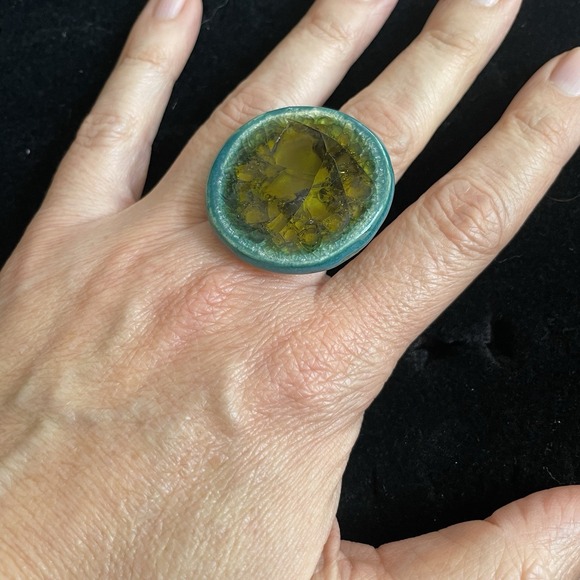
Green Teal Handmade Artisan Ceramic Glass Ring Adjustable Oversized Maximalist
$
Hallmark - Pre-owned
Green Teal Handmade Artisan Ceramic Glass Ring Adjustable Oversized Maximalist
What to Consider
Materials & Construction
- ·Ceramic — Hard, scratch-resistant surface. Retains heat beautifully for even cooking and serving. Can chip if dropped but otherwise very long-lasting.
- ·Glass — Non-porous and non-reactive. Borosilicate glass (Pyrex-style) resists thermal shock. Tempered glass is 4-5x stronger than regular glass.
- ·Individually crafted by hand — greater attention to detail and unique character in each piece. Hand-made products can often be repaired by the maker.
Longevity & Care
- ·Ceramic — Most ceramics are dishwasher safe. Avoid extreme temperature changes (don't go from freezer to oven directly).
- ·Glass — Dishwasher safe. Handle with care — glass does not flex on impact.
- ·⚠ Modern "pyrex" (lowercase) uses soda-lime glass, which is less thermal-shock resistant than vintage PYREX (uppercase) borosilicate. Don't take modern pyrex from freezer to oven.
Cost Per Use
- ·Ceramic — Quality ceramics last decades. Handmade ceramics from skilled potters are functional art that holds value.
- ·Glass — Glass food storage and cookware lasts indefinitely. No staining, no flavor absorption, no chemical leaching.
- ·Priced around $30 (midpoint of under $50 for Accessories). At ~12 uses/month, this hits the $1-per-use "worth it" mark in 3 months — and falls to roughly 4¢ per use across a 5-year lifespan.
Owner Reviews (0)
No reviews yet.